Binnenlandvaarderskapel
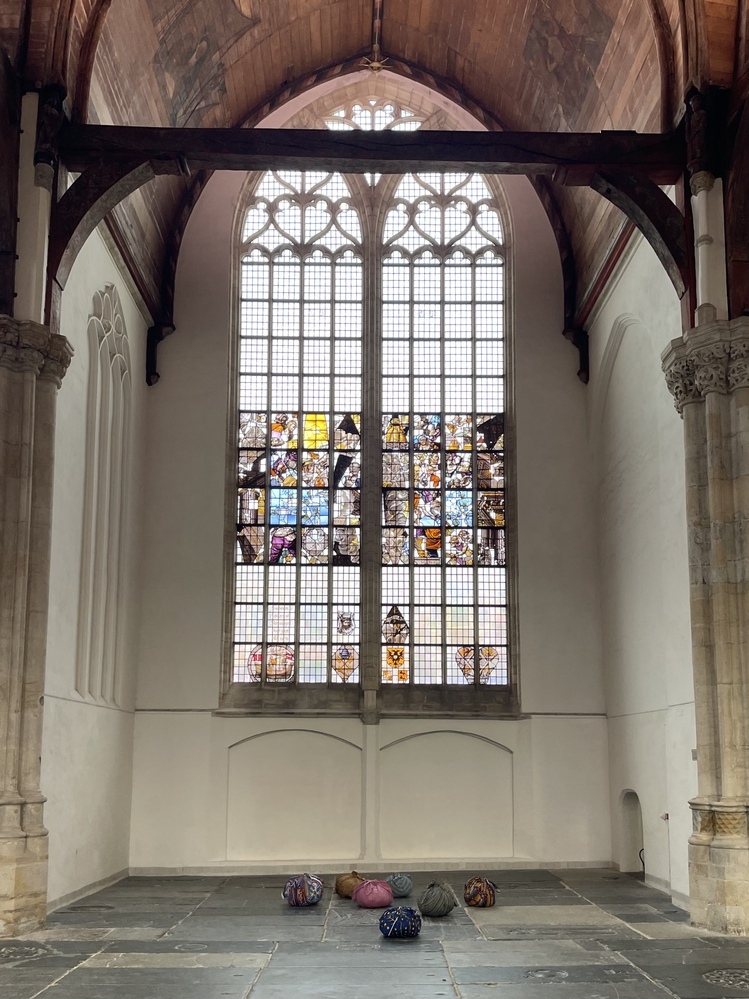
This was the chapel of the Binnenlandvaarders, Amsterdam's oldest guild. Together with the [Buitenlandvaarders], they formed an essential part of the city's economic prosperity. Before this chapel was built, the Binnenlandvaarders shared an altar dedicated to John the Baptist with the Fruitmerchants and Furriers elsewhere in the church. Thanks to their prominent economic position, during the expansion of the Old Church - between 1493 and 1510 - the skippers of the “free sea” managed to finance their own chapel.
---
## The skippers of Amsterdam
In addition to the numerous merchants who settled in Amsterdam, skippers were an important professional group for the development of the port city. When merchants sold their cargo, they depended on the boatmen to get it safely and securely to its destination. This dependency entailed significant risks, so the city government felt compelled to regulate both inland and foreign shipping. However, these measures did not affect the income of the boatmen, who managed to maintain their economic position.
The symbol of the skippers is an inverted purse from which coins fall out, bearing the motto “Al Nut, Al Nyet.” This vanitas symbol is a reminder that earthly wealth ultimately has no value after death. It acts almost as a warning to those so successful boaters. The symbol can be seen on the [vault paintings of the Binnenlandvaarderskapel], and also appears in various places in the church, including on one of the [misericordes] in the Hoogkoor. It is also found in the city, such as on the gable stone of Smaksteeg 1-3, where the guildhouse of the Binnenlandvaarder once stood.
## The Consequences of the "Beeldenstorm"
In Catholic times, the Oude Kerk housed numerous statues of saints and altars dedicated to specific saints. These did not survive the Beeldenstorm - a period of iconoclast outbreaks throughout Northern Europe - and the subsequent Alteration. Indeed, for Protestants, richly decorated altars and images of saints were considered idolatry; they sought a sober church interior that would not distract attention from worship. Using historical sources, it has largely been possible to reconstruct which images and altars were located in different places in the church. In the case of the Interior Father's Chapel, it cannot be said with certainty whether there was a cross altar or an altar dedicated to St. Peter.
In addition, after the Alteration, the polychrome vault paintings of the Old Church were painted over, again this was done to create a more austere church interior. During the restoration that began in 1955, the vault paintings were largely restored. The inverted pouch symbolizing boaters is part of a vault painting depicting a Pieta. The other vault field depicts the Last Judgment.
Explore the elements of the work
Read more
Read more
Read more
Read more
Part of
Read more
Related
Read more
Read more
Read more
Read more
Identifiers for references
| Oude kerk Adlib Collect priref | 2358 |