Anastasis (Heilig Graf)
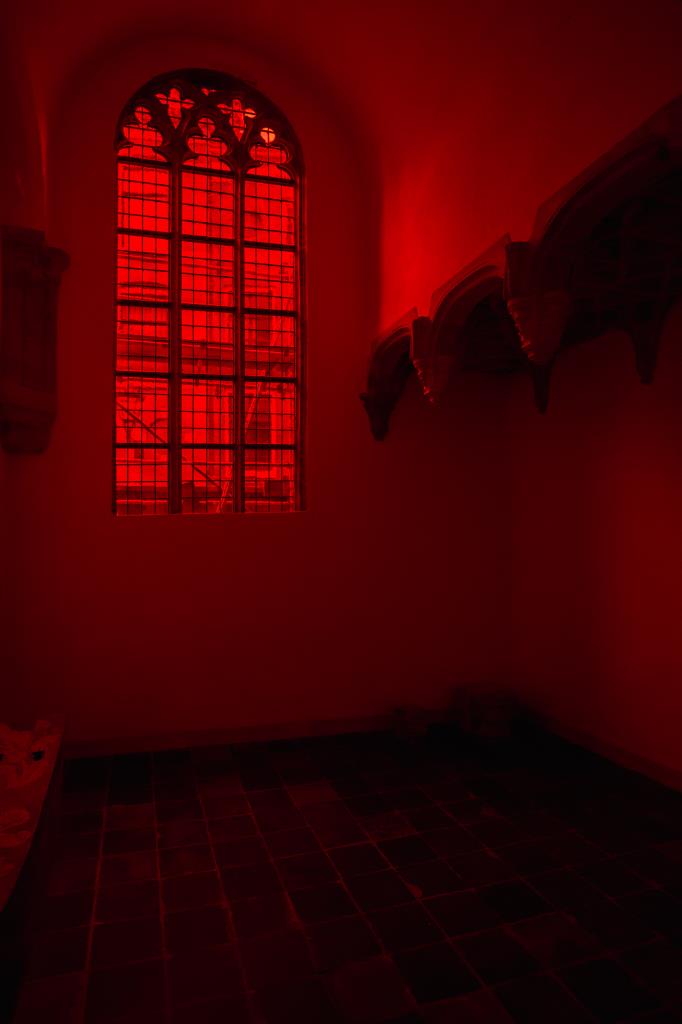
The red stained glass window in the Holy Sepulchre is an artwork by Giorgio Andreotta Calò (Venice, 1979) and refers to the layered past of the Oude Kerk. It emphasises the origin of the room it is situated in: the Holy Sepulchre Chapel. This chapel was built in 1515 as 'prope sepulchrum domini' (the tomb of Christ). It's a replica of the Holy Sepulchre Church in Jerusalem, where a red light is permanently shining to guard the tomb of Christ.
The installation of the window caused controversy and even a lawsuit. It was therefore decided to further discuss the work and the changing meaning of heritage. Starting from the installation, a conversation is organised at the Oude Kerk every 21st of June, the longest day of the year.
| Period | 21st century |
| Notes | De ‘artist proof’ van dit raam werd in 2019 door de kunstenaar geschonken aan Oude Kerk als officieel onderdeel van de collectie. ‘editie 1/1’ is in zijn geheel overgedragen aan de Triënnale |
| Location | Heiliggraf |
| Materials | Stained glass panels, glass (material) |
| Number of parts | 1 |
Fragments of a process
Part of
Read more
Related
Read more
Als onderdeel van het artistieke project Anastasis werd het originele glas-in-loodraam in het Heilig Graf vervangen door een rood raam om de beeldenstorm te herdenken en hulde te brengen aan de christelijke symboliek van de dood en de wederopstanding van Christus.
Read more
Net als het werk van Giorgio Andreotta Calò gebruikt The Walk licht om de kerkruimte te transformeren.
Read more
Read more
Read more
Read more
Read more
Identifiers for references
| Oude kerk Adlib Collect priref | 2062 |